 |
| ethylenediaminetetraacetic acid (EDTA) |
Sunday, December 28, 2014
EDTA
A chelating agent of particular economic significance is ethylenediaminetetraacetic acid (EDTA).
EDTA is a versatile chelating agent. It can form four or six bonds with a metal ion, and it forms chelates with
both transition-metal ions and main-group ions. EDTA is frequently used in soaps and detergents, because it
forms a complexes with calcium and magnesium ions. These ions are in hard water and interfere with the
cleaning action of soaps and detergents. The EDTA binds to them, sequestering them and preventing their
interference. In the calcium complex, [Ca(EDTA)]2–, EDTA is a tetradentate ligand, and chelation involves
the two nitrogen atoms and two oxygen atoms in separate carboxyl (-COO–) groups. EDTA is also used
extensively as a stabilizing agent in the food industry. Food spoilage is often promoted by naturally-occurring
enzymes that contain transition-metal ions. These enzymes catalyze the chemical reactions that occur during
spoilage. EDTA deactivates these enzymes by removing the metal ions from them and forming stable chelates
with them. It promotes color retention in dried bananas, beans, chick peas, canned clams, pecan pie filling,
frozen potatoes, and canned shrimp. It improves flavor retention in canned carbonated beverages, salad
dressings, mayonnaise, margarine, and sauces. It inhibits rancidity in salad dressings, mayonnaise, sauces, and
sandwich spreads. EDTA salts are used in foods at levels ranging from 33 to 800 ppm.

Wednesday, June 4, 2014
Tuesday, March 25, 2014
Breathalyzer
Chemistry of a Breathalyzer
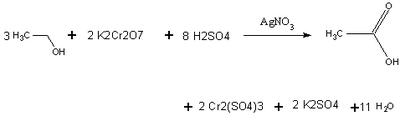
Using Beer's law, the spectrophotometer can relate concentration to absorbance levels of the chromium ion. The amount of alcohol present is proportional to the stoichiometric coefficients. An actual breathalyzer only needs to detect 25 micrograms of ethanol to give a reading 0.10 Blood Alcohol Level.
Credit : http://chem242.blogspot.com/2005/08/chemistry-of-breathalyzer.html
Sunday, March 23, 2014
Saturday, March 22, 2014
Monday, February 24, 2014
Expanded PS
Polystyrene Boxes for Food
Concerns
over the use of PS should best be analysed based on facts rather than on
perception .
The fact
that advanced countries like Japan , US and The EU continue to allow the use of
PS as a food packaging material speaks volume about its safety .
Basically there are 2 forms of PS foam
·
Extruded polystyrene [ foam plates , egg cartons and other food food service applications ]
·
Expanded polysterene [ coffee
cups , packaging of delicate E & E appliances
, consumer products ]
Both
types are also used as thermal insulation in Industrial , commercial and
residential construction.
[i]What is EPS?
EPS (Expanded Polystyrene) or as many know by The Dow Chemical Company's
trade marked name, STYROFOAM,
is an extremely lightweight product that is made of expanded polystyrene beads.
Originally discovered by Eduard Simon in 1839 in Germany by accident, EPS foam
is more than 95% air and only about 5% plastic.
Small solid plastic particles of polystyrene are made from the monomer
styrene. Polystyrene is normally a solid thermoplastic at room temperature that can be melted at
higher temperature and re-solidified for desired applications. The expanded
version of polystyrene is about forty times the volume of the original
polystyrene granule.
Expanded polystyrene (EPS) is a
versatile, lightweight material that can be manufactured into a variety of
products. EPS offers a high-performance
yet economical support for a wide variety of items—from sensitive
electronics to appliances to pharmaceuticals—to be safely delivered to market.
Manufacturers rely on EPS packaging because of its ability to prevent or minimize product damage during
transit and its excellent insulation properties required for food and
medical shipments.
 Yet
EPS packaging, just like any disposable packaging, will eventually become a solid waste and have to be managed. But here’s the good news: EPS
is recyclable. Although the availability of polystyrene recycling programs
varies by community and can be limited, the EPS industry uses average of 50
percent of the post consumer material collected in the manufacture of new EPS
transport packaging and loose fill packaging, which has reduced requirements
for raw material resources, energy consumption has diverted material from landfills.
Yet
EPS packaging, just like any disposable packaging, will eventually become a solid waste and have to be managed. But here’s the good news: EPS
is recyclable. Although the availability of polystyrene recycling programs
varies by community and can be limited, the EPS industry uses average of 50
percent of the post consumer material collected in the manufacture of new EPS
transport packaging and loose fill packaging, which has reduced requirements
for raw material resources, energy consumption has diverted material from landfills.Sunday, December 1, 2013
Smart materials - hydrogels
A hydrogel is a network of cross-linked polymers designed to absorb water.

It does this because it is hydrophilic.
In water, the polymer unit loses the Na+ ion and so the polymer becomes negatively charged as shown .
In water, the polymer unit loses the Na+ ion and so the polymer becomes negatively charged as shown .

A long polymer chain usually curls up into a ball when in solution. However, when the Hydrogen atom is lost, the negative charges on the polymer chain repel.

The water then is attracted to the negative charge and hydrogen bonding occurs. The polymer can absorb up to 300 times its own mass in water.
Three major uses for hydrogels are: disposable nappies, water crystals for plants and hair gel.
Source : Robertcampbelluas edublog
Keeping in touch with latest materials !
Smart Materials
A Smart material is a material that can change its properties when there is a change in it’s environment. Examples of external stimuli that can change are: pH, temperature, stress, pressure, water content / moisture, light etc
Shape memory metals


A Smart material is a material that can change its properties when there is a change in it’s environment. Examples of external stimuli that can change are: pH, temperature, stress, pressure, water content / moisture, light etc
Shape memory metals
A metal that ‘remembers’that it is meant to be a certain shape. The material can be easily bent (deformed) then under a reasonable temperature moves back to its original shape.
Smart memory metal are very useful because they are reliable (they do the same thing every time) and repeatable (we can do it over and over again).
The SCIENCE behind them:
Shape memory alloys have two crystal structures that the metal transfers between via a molecular rearrangement. In a molecular rearrangement, the solid state phase changes but molecules remain closely packed and therefore remain solid. The 2 phases are known as Martensite and Austenite.

The Martensite is soft and easily deformed.
You can see clearly the different crystal structures. When the Austenite cools its crystal structure changes This is known as the martensitic transformation.
Uses
All the things that we want to move once done with a motor or lever, we can now do with smart metals. These are low cost, low mass, smaller in size resulting in lower energy consumption.
Medicine – doctors use memory alloys to treat broken bones. The alloy is cooled then wrapped around the broken bone. Body temperature warms up the metal so it goes back to its original shape thus pulling the bone together and holding them in place while it heals.
The same thing happens for braces.

Key Properties of materials
Different materials exhibit different working properties. Listed below are the key properties which determine how materials behave.
- conductivity is the ability of a material to conduct heat or electrical energy
- strength is the ability of a material to withstand a force without breaking or bending
- elasticity is the ability of a material to bend and then to return to its original shape and size
- plasticity is the ability of a material to permanently change in shape
- malleability is the ability of a material to permanently deform in all directions without cracking
- ductility is the ability of a material to deform, usually by stretching along its length
- hardness is the ability of a material to resist wear, scratching and indentation
- toughness is the ability of a material to withstand blows or sudden shocks without breaking
- durability is the ability of a material to withstand wear, especially as a result of weathering
- fusibility is the ability of a material to change into a liquid or molten state when heated to its melting point
Smart materials
Smart materials are reactive materials. Their properties can be changed by exposure to stimuli, such as electric and magnetic fields, stress, moisture and temperature.
Smart colours

Smart colours are pigments which can be incorporated into paints, dyes, inks and plastics.
- thermochromic pigments react to changes in temperature
- photochromic pigments react to changes in light levels
Photochromatic materials are used in the manufacture of sunglasses. Exposure to sunlight causes the lens of the glasses to darken to protect the eye.
Conductive polymers
Most plastics are natural insulators. The advantages of making plastics which areconductors are:
- they are easier to manufacture
- they are lighter and cheaper than metals
- they prevent the build-up of static electricity which can damage microcircuits
Some conductive polymers are also biocompatible, making them suitable for use in medical devices.
Nanomaterials
Nanoparticles improve the mechanical properties of a material, such as stiffness or elasticity. When incorporated into polymers, they can be used as lightweight replacements for metals.
Nanomaterials are used in car manufacturing to create cars that are faster, safer and more fuel efficient. They can also be used to produce more efficient insulation and lighting systems.
Magic Glass
Sandwiched between two outer layers of conventional glazing sits a liquid crystal polymer membrane that can be activated by remote control or turned on (opaque) and off (see through) via conventional light switches.

Such shifts in opacity mean the same surface can serve as a window, partition, privacy screen or projection surface. Prefabricated with the synthetic core in place, units can be safely brought to and installed on residential or commercial building sites with ease.
Thursday, September 19, 2013
Avoid , reduce , reuse , recycle
Every plastic container or bottle has a recycling symbol. The symbol is a number, ranging from 1 to 7, within a triangle. While you may think nothing of these symbols, they can actually offer a great deal of information regarding the toxic chemicals used in the plastic, how likely the plastic is to leach, how un-bio-degradable the plastic is, and ultimately the safety of the plastic.

PET or PETE (polyethylene terephthalate)
Found in: Soft drink, water and beer bottles; mouthwash bottles; peanut butter containers; salad dressing and vegetable oil containers; ovenable food trays.
Recycling: Picked up through most curbside recycling programs.
Recycled into: Polar fleece, fiber, tote bags, furniture, carpet, paneling, straps, (occasionally) new containers


PET or PETE (polyethylene terephthalate)
Found in: Soft drink, water and beer bottles; mouthwash bottles; peanut butter containers; salad dressing and vegetable oil containers; ovenable food trays.
Recycling: Picked up through most curbside recycling programs.
Recycled into: Polar fleece, fiber, tote bags, furniture, carpet, paneling, straps, (occasionally) new containers

HDPE (high density polyethylene)
Found in: Milk jugs, juice bottles; bleach, detergent and household cleaner bottles; shampoo bottles; some trash and shopping bags; motor oil bottles; butter and yogurt tubs; cereal box liners
Recycling: Picked up through most curbside recycling programs, although some allow only those containers with necks.
Recycled into: Laundry detergent bottles, oil bottles, pens, recycling containers, floor tile, drainage pipe, lumber, benches, doghouses, picnic tables, fencing
Found in: Milk jugs, juice bottles; bleach, detergent and household cleaner bottles; shampoo bottles; some trash and shopping bags; motor oil bottles; butter and yogurt tubs; cereal box liners
Recycling: Picked up through most curbside recycling programs, although some allow only those containers with necks.
Recycled into: Laundry detergent bottles, oil bottles, pens, recycling containers, floor tile, drainage pipe, lumber, benches, doghouses, picnic tables, fencing
HDPE is a versatile plastic with many uses, especially for packaging. It carries low risk of leaching and is readily recyclable into many goods.

V (Vinyl) or PVC
Found in: Window cleaner and detergent bottles, shampoo bottles, cooking oil bottles, clear food packaging, wire jacketing, medical equipment, siding, windows, piping
Recycling: Rarely recycled; accepted by some plastic lumber makers.
Recycled into: Decks, paneling, mudflaps, roadway gutters, flooring, cables, speed bumps, mats
Found in: Window cleaner and detergent bottles, shampoo bottles, cooking oil bottles, clear food packaging, wire jacketing, medical equipment, siding, windows, piping
Recycling: Rarely recycled; accepted by some plastic lumber makers.
Recycled into: Decks, paneling, mudflaps, roadway gutters, flooring, cables, speed bumps, mats
PVC is tough and weathers well, so it is commonly used for piping, siding and similar applications. PVC contains chlorine, so its manufacture can release highly dangerous dioxins. If you must cook with PVC, don't let the plastic touch food. Also never burn PVC, because it releases toxins.

LDPE (low density polyethylene)
Found in: Squeezable bottles; bread, frozen food, dry cleaning and shopping bags; tote bags; clothing; furniture; carpet
Recycling: LDPE is not often recycled but some communities will accept it. Plastic shopping bags can be returned to many stores for recycling.
Recycled into: Trash can liners and cans, compost bins, shipping envelopes, paneling, lumber, landscaping ties, floor tile
Found in: Squeezable bottles; bread, frozen food, dry cleaning and shopping bags; tote bags; clothing; furniture; carpet
Recycling: LDPE is not often recycled but some communities will accept it. Plastic shopping bags can be returned to many stores for recycling.
Recycled into: Trash can liners and cans, compost bins, shipping envelopes, paneling, lumber, landscaping ties, floor tile
LDPE is a flexible plastic with many applications.

PP (polypropylene)
Found in: Some yogurt containers, syrup bottles, ketchup bottles, caps, straws, medicine bottles
Recycling: Number 5 plastics can be recycled
Recycled into: Signal lights, battery cables, brooms, brushes, auto battery cases, ice scrapers, landscape borders, bicycle racks, rakes, bins, pallets, trays
Found in: Some yogurt containers, syrup bottles, ketchup bottles, caps, straws, medicine bottles
Recycling: Number 5 plastics can be recycled
Recycled into: Signal lights, battery cables, brooms, brushes, auto battery cases, ice scrapers, landscape borders, bicycle racks, rakes, bins, pallets, trays
Polypropylene has a high melting point, and so is often chosen for containers that must accept hot liquid. It is gradually becoming more accepted by recyclers.

PS (polystyrene)
Found in: Disposable plates and cups, meat trays, egg cartons, carry-out containers, aspirin bottles, compact disc cases
Recycling: Number 6 plastics can be recycled
Recycled into: Insulation, light switch plates, egg cartons, vents, rulers, foam packing, carry-out containers
Found in: Disposable plates and cups, meat trays, egg cartons, carry-out containers, aspirin bottles, compact disc cases
Recycling: Number 6 plastics can be recycled
Recycled into: Insulation, light switch plates, egg cartons, vents, rulers, foam packing, carry-out containers
Polystyrene can be made into rigid or foam products -- in the latter case it is popularly known as the trademark Styrofoam. Evidence suggests polystyrene can leach potential toxins into foods. The material was long on environmentalists' hit lists for dispersing widely across the landscape, and for being notoriously difficult to recycle. Most places still don't accept it, though it is gradually gaining traction.

Number 7 Plastics
Miscellaneous
Found in: Three- and five-gallon water bottles, 'bullet-proof' materials, sunglasses, DVDs, iPod and computer cases, signs and displays, certain food containers, nylon
Recycling: Number 7 plastics have traditionally not been recycled.
Found in: Three- and five-gallon water bottles, 'bullet-proof' materials, sunglasses, DVDs, iPod and computer cases, signs and displays, certain food containers, nylon
Recycling: Number 7 plastics have traditionally not been recycled.
A wide variety of plastic resins that don't fit into the previous categories are lumped into number 7. A few are even made from plants (polyactide) and are compostable. Polycarbonate is number 7, and is the hard plastic that has parents worried these days, after studies have shown it can leach potential hormone disruptors.
TOXIC HOME CHEMICALS

Baby care products
Flame-retardants are used in the foam found in products like cribs, high chairs, strollers and nursing pillows. The chemicals involved are PBDEs or other retardants with bromine or chlorine, which have been linked to sexual and neurological disorders.

Vinyl flooring and shower curtains
Phthalates are used to soften the plastic that goes into vinyl flooring and shower curtains. This chemical has been associated with causing harmful effects to growth and development in children, and impacting brain functions like learning, behavior and memory.

Nonstick pots and pans
There’s some controversy over the effects of the coating on nonstick pans, commonly known as Teflon. The Teflon chemical, PTFE, is thought to be harmless. But non-stick pans heated past 500 degrees Fahrenheit, or that have started to flake, can emit toxic byproducts of PTFE that can cause flu-like symptoms in humans.

Consumer electronics
This category can be a toxic cocktail. Phthalates are found in the power cords of devices or controller cables of game consoles. Brominated flame retardants (BFRs), which have been linked to impaired brain development and cancer in humans, are added to circuit boards and plastic casings.

Hard plastic bottles and containers
Bisphenol A (BPA) is found in many plastic bottles and containers. Recent studies have shown that BPA could have effects on the brain, behavior and prostrate gland in infants and young children.

Insulation
BFRs are added to housing insulation materials to meet fire safety codes. These chemicals can accumulate in the body over a long period of time and have been linked to impaired brain development and cancer in humans.

Air fresheners and cleaners
Sprays or even some scented candles that “freshen” the air often use phthalates to spread the fragrance.
Cosmetics
Phthalates can also be found in perfumes, deodorants and hair sprays, as well as nail polish.

Carpets
Carpets, and some furniture, are also treated with the same non-stick chemicals, PTFE, used in Teflon. When PTFEs break down, one of the byproducts is a carcinogenic chemical, PFOA, also linked to infertility and birth defects in humans.

Personal hygiene products
The antimicrobial chemicals, such as triclocarban, added to soaps and lotions have been linked to interfering with the production of thyroid hormones, which affect neurological development in children. Some of these products also include phthalates.
Wednesday, September 18, 2013
Free Radicals
The human body is made up of cells. Cells are made up of molecules, and molecules are made up of atoms. Atoms contain the following components:
- a nucleus-the center of the atom
- protons-positively-charged particles in the nucleus
- neutrons-particles in the nucleus that have no charge
- electrons-negatively-charged particles circling the nucleus in layers called shells
- a nucleus-the center of the atom
- protons-positively-charged particles in the nucleus
- neutrons-particles in the nucleus that have no charge
- electrons-negatively-charged particles circling the nucleus in layers called shells
Electrons always travel in pairs-or at least they prefer to travel that way. Occasionally, though, an atom or a group of atoms (a molecule) may lose one electron. When this happens, the atom or molecule becomes a free radical.
Like the human body in general, atoms prefer stability. An atom that's missing an electron will steal one from the nearest stable atom-turning that atom into a free radical. As you can probably imagine, this is the start of a chain reaction.
What causes free radicals?
Free radicals are created as a result of the process of oxidation, when a substance combines with oxygen. This is part of the body's normal metabolism, and does increase with age. Free radicals can also be created by the immune system to help destroy bacteria and viruses during an infection. And they can form as a result of exposure to certain chemicals, environmental toxins like pollution and radiation, and cigarette smoke.
Free radicals are created as a result of the process of oxidation, when a substance combines with oxygen. This is part of the body's normal metabolism, and does increase with age. Free radicals can also be created by the immune system to help destroy bacteria and viruses during an infection. And they can form as a result of exposure to certain chemicals, environmental toxins like pollution and radiation, and cigarette smoke.
Under normal circumstances the body can easily rid itself of free radicals. But problems can occur if the number of free radicals increases beyond the body's ability to neutralize or destroy them.
Monday, September 16, 2013
Hidden dangers of the 'Everywhere Chemicals " - The Pthalates & BPA
What is Bisphenol-A (BPA)?BPA is used to make polycarbonate plastic, a shatter-resistant and clear material used in products ranging from plastic bottles and eyeglasses to sports safety equipment. BPA is also found in baby bottles, sippy cups, teethers, water bottles, food storage containers, and the lining of many food and beverage cans.
C15H16O2 or (CH3)2C(C6H4OH)2

What are phthalates?
Phthalates are esters of phthalic acid (or benzene-1,2-dicarboxylic acid). They include di-ethyl phthalate (DEP), di-isobutyl phthalate (DIBP), di-n-butyl phthalate (DBP), and di-n-octyl phthalate (DOP), to name a few.
Phthalates are a group of chemicals used to make plastics more flexible and harder to break. They are often called plasticizers. Some phthalates are used as solvents (dissolving agents) for other materials. They are used in hundreds of products, such as vinyl flooring, adhesives, detergents, lubricating oils, automotive plastics, plastic clothes (raincoats), and personal-care products (soaps, shampoos, hair sprays, and nail polishes).
Phthalates are used widely in polyvinyl chloride plastics, which are used to make products such as plastic packaging film and sheets, garden hoses, inflatable toys, blood-storage containers, medical tubing, and some children's toys. Also responsible for the smell of new vinyl shower curtains and a frequent component of fragrances used in air freshners , detergents , cleaning products . They show up in cosmetics to hold color and scents and have been found in nail polish and treatments .
|
 DBP ( dibutylphthalate) DBP ( dibutylphthalate)phthalate.png/200px-Bis(2-ethylhexyl)phthalate.png)
Bis(2-ethylhexyl) phthalate (di-2-ethylhexyl phthalate, DEHP; dioctyl phthalate, DOP),
 Diisobutylphthalate Diisobutylphthalate
BPA can leach from plastic containers into foods and beverages, especially when they are heated, or used for long periods of time. Also, when kids put toys, teethers, and other products that contain phthalates in their mouths, the chemical may leach from the product to the child.
Animal studies have shown that exposure to BPA can have developmental effects. In laboratory animals, exposure to high levels of BPA has been associated with adverse effects on reproduction. Some human studies suggest a possible effect of BPA on reproductive hormones, especially in men exposed to high levels in the workplace, but human data are not sufficient to determine if BPA adversely affects reproduction.
Animal studies have associated phthalate exposure with adverse effects on the liver, kidney, and male and female reproductive system, especially when exposures occur to the developing organism.
Tips to minimize exposure to BPA and Phthalates:
|
Sunday, August 18, 2013
Is Butter Good for you ?
For decades, the food processing industry has used advertising campaigns to successfully lie about the urgent and proven need to replace “unhealthy” butter with “healthy” margarine. But now we know that this teaching was nothing more than made-up. In the battle of margarine vs butter, you may now be surprised which comes out on top.
 Even back in the 60s and 70s sufficient scientific evidence indicated that butter was far better than margarine for good health. Who knew? Nevertheless, the industrial fake food industry relentlessly convinced millions of us to eat margarine for health reasons.
The commercial processed fake food industry merged with Madison Avenue, the AMA, and mainstream media to instill a whopper of a lie by reinforcing margarine as better for you. They claimed in unison that saturated fats made you fat and promoted cardiovascular disease.
Even back in the 60s and 70s sufficient scientific evidence indicated that butter was far better than margarine for good health. Who knew? Nevertheless, the industrial fake food industry relentlessly convinced millions of us to eat margarine for health reasons. The commercial processed fake food industry merged with Madison Avenue, the AMA, and mainstream media to instill a whopper of a lie by reinforcing margarine as better for you. They claimed in unison that saturated fats made you fat and promoted cardiovascular disease.
Damage from Fake Fats that Replace Favorable Fats
Partially hydrogenated fatty acids in margarine damage arteries and blood vessels. They lower good cholesterol, and raise blood levels of triglycerides and lipoproteins leading to cardiovascular damage. They also raise C-reactive protein, an inflammatory and cellular dysfunction marker. Worse yet, they inhibit the utilization of essential omega 3-fatty acids as wells a prostaglandins, which eliminate blood clots. Additionally, a diet high in partially hydrogenated fatty acids has been linked to insulin resistance and type 2 Diabetes.The NY Times covers hydrogenated oil health issues while still promoting saturated fat nonsense. In order to function properly, your lungs, heart, immune system liver, bones, hormones and cell membranes all require high quality saturated fats - in moderation of course. Fatty acids and cholesterol are needed for healthy cell membranes, hormone and vitamin D production, and the transport and utilization of important vitamins and minerals. Now even mainstream media is spreading the truthful real news on butter. The New England Journal of Medicine recently solidified the link between trans fats and heart disease. Even low levels of trans fats consumption (1%-2%) substantially increase heart disease.
Butter vs Margarine: Butter Hierarchy: The Good, the Bad and the Ugly
So what should you be looking for?- At the top of the pyramid is organic butter made with raw milk from grass fed cows.
- The middle level is organic butter with pasteurized milk from grass fed cows and without rBGH, rBST, or antibiotics.
- The pyramid’s base is butter made from pasteurized milk from confined, grain fed, factory farmed, antibiotic and likely rBGH or rBST injected cows.
Amazingly, the butter at the bottom of the pyramid is still better for you than margarine! Margarine is merely a lab created plastic food-like substance, not by any means a real food. It’s cheap to make, lacks nutritional merit, and damages health. But it has a longer shelve life and a higher profit margin than real butter.
Five Reasons to Eat Real Butter
- 1. Conjugated Linoleic Acid (CLA) - Raw organic, pastured butter has loads of anti- tumor CLA. It inhibits the growth of cancer cells in the skin, colon, breasts and lungs. It’s anti-fungal and it stimulates muscle growth while preventing weight gain.
- 2. Butyric Acid - Butter contains 4% butyric acid – a short chain fatty acid that research indicates can inhibit tumors. It also signals the immune system into action when an infection is brewing.
- 3. Vitamin K2 - Raw, organic, pastured butter and cream contains vitamin K2 – a necessary co-factor in vitamin D synthesis. K2 also ushers calcium out of your blood stream and into bone cells which increases bone density instead of calcifying arterial and heart tissue. Check out Mike Barrett’s article on vitamin K deficiency symptoms.
- 4. Fat–Soluble Vitamins – Butter is a good source of the fat soluble vitamins A, D, and E. It’s also an excellent vehicle for their assimilation.
- 5. The Wulzen Factor - Raw, unpasteurized butter, cream and milk contain the “Wulzen factor” an anti-stiffness agent. It protects against calcification of the joints (osteoarthritis) as well as cataracts, and the calcification of the pineal gland. Pasteurization destroys the Wulzen Factor.
Raw, organic butter is a superfood that won’t make you fat if consumed in moderation. It fact, it consists of short chain fatty acids (SCFA) and medium chain fatty acids(MCFA), which are not significantly stored as fat but easily used as energy.
This may finally be the end of the butter vs. margarine battle.
Source : http://www.whydontyoutrythis.com/2013/08/butter-vs-margarine-the-big-fat-butter-lie.html
Subscribe to:
Posts (Atom)